What Is AirSmart Air Conditioning and How Does It Work?


Government Rebates Now Available on Energy-Efficient Air Conditioners when Replacing your Gas Heater.
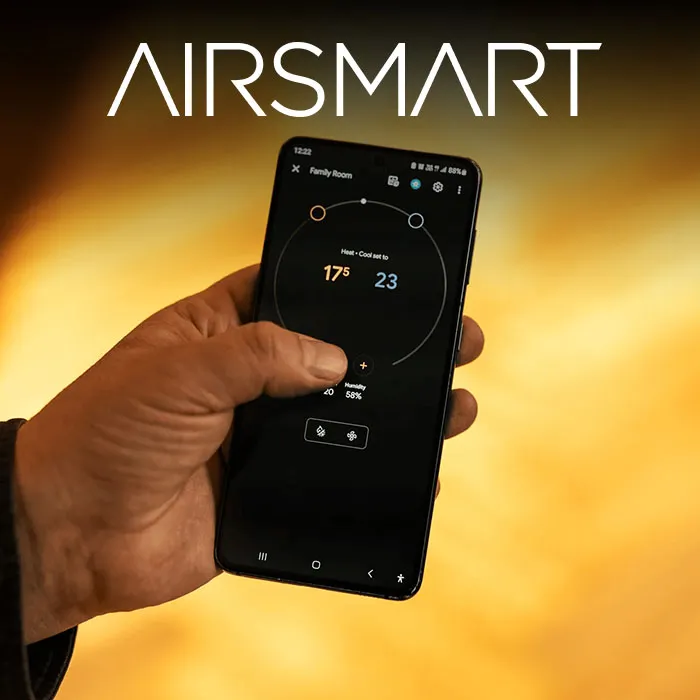
Learn how AirSmart air conditioning works through compact ducting, zoning and integrated air purification for Melbourne homes.
AirSmart is not a single off-the-shelf unit. Its Indoor Environment System, or IES, is configured around the building, the rooms being conditioned and the available service space. The heating and cooling equipment, air delivery, controls and purification components are planned as one coordinated system.
AirSmart IES Components
An AirSmart IES brings several functions together. The selected heating and cooling equipment conditions the air, while a compact duct network distributes it to individual rooms. Round, linear or selected concealed outlets can be coordinated with the interior design, subject to the building and airflow requirements.
The manufacturer’s Indoor Environment System overview explains that IES combines heating, cooling, air purification and control through a compact, high-performance duct network.
How Air Moves Through the System
The system draws return air back to the indoor equipment, conditions it and sends it through the supply duct network. Outlet locations are selected to distribute air across each occupied space without making the mechanical layout unnecessarily prominent.
A compact duct network can create more routing options, but the installation still needs suitable equipment space, return-air pathways, drainage, electrical connections and future service access. These requirements must be resolved before the final layout is confirmed.
Thermal Zoning and Comfort Control
AirSmart describes advanced thermal zoning that allows spaces to be controlled independently while maintaining overall system balance. A household may use living areas during the day and bedrooms at night, so the zoning plan should reflect how the rooms are occupied.
The appropriate zone boundaries depend on room loads, orientation, glazing and airflow requirements. Adding more zones does not automatically improve comfort if the active system cannot maintain the airflow required by the design.
Three-Stage Air Purification
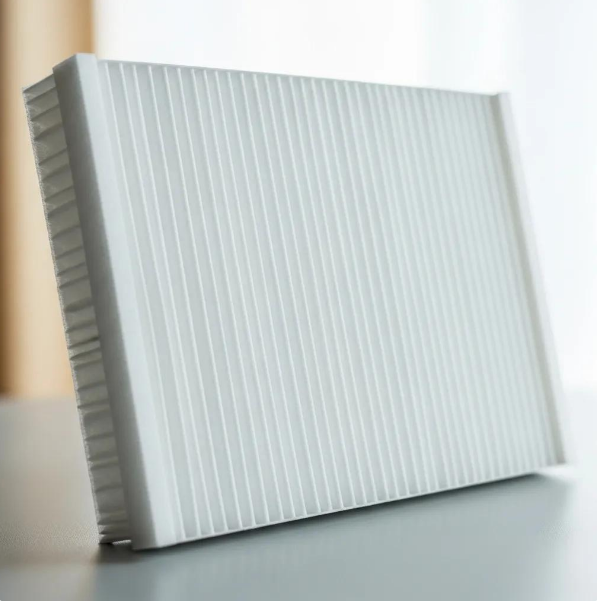
Air purification forms part of the IES rather than being treated as a separate portable appliance. AirSmart specifies MERV-13 filtration for dust and allergens, UV-C treatment for microorganisms, and photocatalytic oxidation, or PCO, for VOCs and odours.
These components treat recirculated air within the system. They should not be presented as a replacement for any fresh-air ventilation required by the building design.
Property Assessment Before Installation
Before recommending a system, we assess floor area, ceiling height, insulation, glazing, orientation, roof space and how the rooms will be used. We also consider equipment access and the visible locations of outlets, returns and controls.
Our AirSmart installation service explains the installation approach in more detail. Floor plans or renovation drawings can help us identify possible equipment and duct routes before the design is finalised.
Discuss AirSmart for Your Melbourne Home
Understanding how AirSmart air conditioning works is the first step; the next is determining whether the system suits the property. Share your plans, project stage and comfort priorities with Oz Air Group so we can discuss the practical installation requirements.
Ready to assess your project? Contact Oz Air Group to arrange an AirSmart installation discussion for your Melbourne home.

Areas we service
Oz Air covers Melbourne and its northern suburbs.

Get in touch