


.png)

What's an Air Filter on Your Air Conditioner?


Government Rebates Now Available on Energy-Efficient Air Conditioners when Replacing your Gas Heater.
An AC air filter is a replaceable part that catches airborne particles, protects the system's internal components, and helps keep the air in your home cleaner. Below, we explain what filters do, how common filter types compare, when to replace them, and how a clean filter supports both health and energy savings. Many homeowners notice extra dust, worsening allergies, or rising energy bills before they think about their filter. Understanding how filtration works solves those everyday problems. You'll learn how filters shield system components, the implications of different filter materials and MERV ratings, a practical replacement schedule based on household factors, and a safe step-by-step replacement guide. We also include comparison tables and checklists to help you choose the right filter for allergies, pets, budgets, and local climate conditions.
Throughout, we use terms like AC air filter, MERV rating, pleated filter, and HEPA filter so you can make choices that work for real Aussie homes.
What is the Purpose of an AC Air Filter?
An AC air filter has three main jobs: it traps tiny particles to protect your equipment, improves the air quality inside your home, and keeps the airflow steady so your system runs efficiently.
Mechanically, the filter catches dust, pollen, and pet dander before they reach the evaporator coil and blower motor. This stops buildup that would otherwise reduce how efficiently your system transfers heat.
For those living in the home, removing airborne particles means less exposure to allergens and less visible dust. This makes your home more comfortable and supports better respiratory health.
Keeping airflow clear with a clean filter also means your blower doesn't have to work as long and uses less energy. So, good filtration really helps cut down on your running costs.
How Does an Air Filter Protect Your Air Conditioner?
The filter stops tiny particles from settling on the evaporator coil and blower. When gunk builds up on the coil, heat exchange suffers, the compressor runs longer, energy use goes up, and your system can even ice up when it's trying to cool.
Dust that reaches the blower motor and fan speeds up wear and tear, increasing the risk of mechanical failure. Regular filtration means fewer repairs and helps your system perform as the manufacturer intended. That means fewer emergency call-outs and more consistent comfort for your home.
In What Ways Does an Air Filter Improve Indoor Air Quality?
Filters remove particles across a range of sizes, reducing airborne dust, pollen, mould spores, and pet dander that trigger allergy symptoms and respiratory irritation. Higher-efficiency filters capture smaller particles more effectively, which is helpful for people with allergies or asthma when the HVAC system can handle the added resistance. Filters won't remove everything. Gases and the finest particles might need activated carbon or extra technologies, but the right filter will noticeably reduce the amount of particles in your living spaces. Consistent filtration also reduces surface dust, making your home look and feel cleaner and lowering how often you need to dust.
What Are the Different Types of Air Conditioner Filters?
Different filter types offer a trade-off between cost, how well they filter, how much they resist airflow, and how long they last. The best choice for you depends on your priorities, like controlling allergies, dealing with pet dander, or simply keeping costs down.
Common choices for homes include fibreglass, pleated, electrostatic, HEPA (either in-line or standalone), and activated carbon or combo filters. Each one uses different materials and construction to catch particles.
When you're choosing, think about the MERV rating, the size of the particles you need to catch, and whether your HVAC system can maintain good airflow with a filter that has higher resistance.
This quick comparison below matches common situations with filter features, so you can pick what's best for your home.
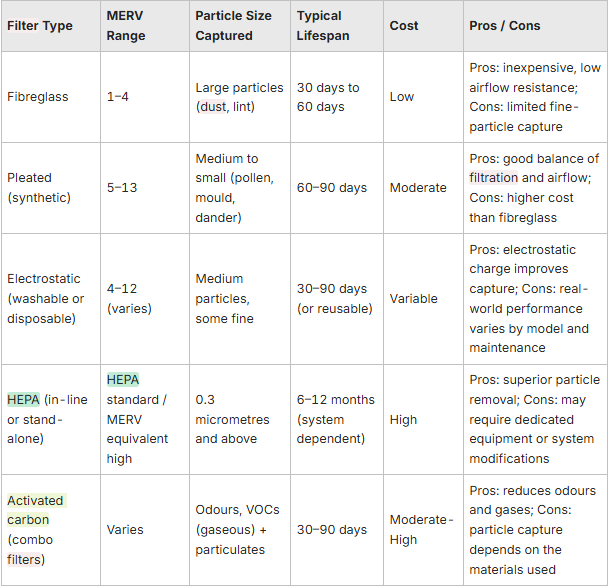
This table shows that cheaper filters allow good airflow but only catch larger particles. HEPA and carbon-enhanced options, on the other hand, meet specific indoor air quality needs but come at a higher cost and sometimes require more effort to install.
How Do Fibreglass, Pleated, Electrostatic, and HEPA Filters Compare?
Fibreglass filters are affordable and let air pass easily, but they only catch larger particles and need frequent replacement. They're an economical choice, but you do have to accept some trade-offs.
Pleated filters increase their surface area by folding the material, which improves how well they catch particles while still allowing reasonable airflow. They're a common middle ground for homes with pets or seasonal allergies.
Electrostatic filters use charged fibres to attract particles and can be disposable or washable. How effective they are in the real world depends on their design and how well they're looked after.
HEPA filters remove the smallest particles very effectively, but they can put a strain on the airflow in standard home HVAC systems. This means you might need to modify your system or use a separate air cleaner.
What Does the MERV Rating Mean for Each Filter Type?
MERV (Minimum Efficiency Reporting Value) tells you how well a filter removes particles of different sizes. Higher MERV numbers mean the filter is better at catching smaller particles.
For most homes, a MERV rating of 8 to 11 offers a good balance between filtration and airflow. MERV 13 is often recommended for households with significant allergy or health concerns, but only if your HVAC system can handle the extra resistance.
Very high MERV filters (above MERV 13) can restrict airflow in systems not designed for them. This might increase your energy use or reduce your comfort. Always check with an HVAC professional before upgrading.
Knowing your MERV helps you pick a filter that suits your home's needs without accidentally causing airflow problems.
Ozair Group can source and install recommended filters and advise on system compatibility for higher-MERV or HEPA solutions. As HVAC specialists, we help homeowners find the right balance between how well a filter works, good airflow, and energy use. We also provide professional installation when your system needs a modification or a check.
How Often Should You Change Your AC Air Filter?
As a general rule, you should replace disposable home filters every 30 to 90 days. The exact timing depends on the filter type, factors in your household, and how much your HVAC system runs. Low-efficiency fibreglass filters often need replacing every month, while higher-quality pleated filters can last up to 90 days with moderate use.
- Pets mean more dander and hair, which shortens your filter's life.
- People with allergies benefit from more frequent changes and higher-MERV filters during peak seasons.
- If your HVAC runs a lot, which is common in extreme climates, your filters will fill up faster and need changing more often.
- Dusty neighbourhoods, nearby construction, or bushfire smoke mean you'll need to change your filters more often, and sometimes use higher-efficiency filters.
These factors interact with the filter material. For example, a home with two pets using a pleated MERV 8 filter might need to change it every 30 to 60 days. The table below matches common household situations with recommended frequencies and explains why they matter.
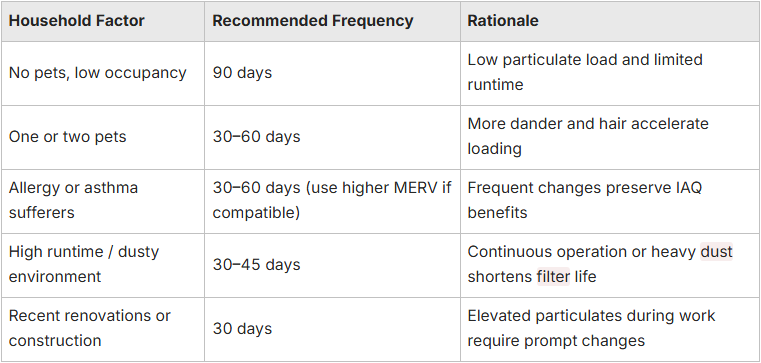
Use this decision table to set an initial schedule, then adjust after you've had a look and observed how your system is performing. If you prefer a hands-off approach, a professional maintenance plan will keep replacements on schedule and take away all the guesswork.
Ozair Group offers maintenance plans and professional filter-change services, timed to the schedules above.
Our plans ensure your filtration is current during high-use seasons and we check your system's airflow after swaps. This gives peace of mind for homes with pets, allergies, or heavy HVAC use. Scheduled servicing reduces the risk of missed replacements and the efficiency losses that follow.
What Factors Affect the Frequency of Filter Replacement?
Filter life depends on particle load, filter material, HVAC runtime, ventilation, and occupant behaviour. Homes that cook frequently, have smokers, or house indoor pets generate more particles and load filters faster. Higher-MERV filters capture more particles but can clog sooner if the system can't handle the resistance, so choose your filter material and replacement intervals together. Short-term events, like bushfire smoke, seasonal pollen spikes, or construction, temporarily raise particle levels and mean you'll need to change your filters more often.
How Can You Identify When Your AC Filter Needs Changing?
Having a look at your filter is the easiest check. If it's darkened by dust, with pleats visibly blocked, it definitely needs replacing.
Signs that your system isn't performing well include weaker airflow at the vents, longer run times to reach your set temperature, higher energy bills, and more dust settling on surfaces. A monthly check during peak seasons will catch a clogged filter early, before performance really drops. Persistent allergy symptoms or unusual system noises are also good reasons to check the filter and, if needed, call in a professional.
What Are the Benefits of Using a Clean AC Air Filter?
A clean filter improves indoor air quality, lowers HVAC energy use, and reduces the chance of component failures by keeping particles out of the system. Clean filters preserve designed airflow, letting the blower and compressor operate efficiently and deliver steady comfort using less electricity. Better filtration reduces exposure to allergens and particles, which helps sensitive occupants and supports overall household well-being. From a cost perspective, changing your filters on time can cut down on repair needs and extend the lifespan of your system's components.
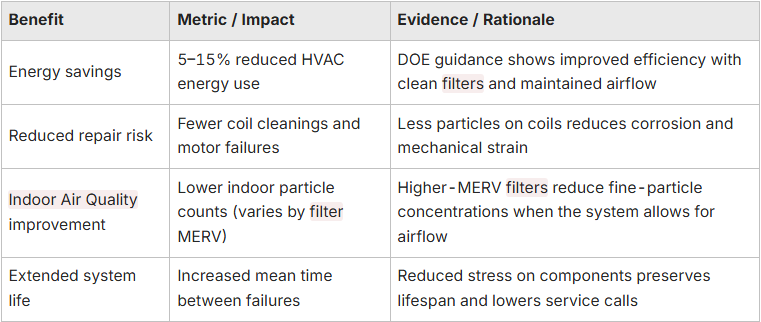
This table puts the benefits in real terms, so homeowners can weigh up maintenance costs against energy and repair savings. Keeping filters clean is a low-effort, high-impact habit that addresses several household priorities all at once.
How Does a Clean Filter Enhance Energy Efficiency and Reduce Costs?
A clean filter maintains the intended airflow, which helps the evaporator coil exchange heat efficiently and lets the compressor cycle normally. This reduces energy use. Keeping up with filtration and routine maintenance can lower your HVAC energy use by roughly 5-15%, depending on your system's condition and the climate.
Even a 10% reduction in runtime during peak months can show up as noticeable monthly savings. Tracking your thermostat's runtime and comparing energy use season to season helps you see the savings from looking after your filters regularly.
In What Ways Does It Extend the Lifespan of Your AC System?
Stopping particle buildup on the evaporator coil and blower reduces wear on moving parts and lowers thermal stress on compressors, which are often the most expensive components to repair or replace. Fewer clogs and cleaner internals mean fewer service calls for coil cleanings or motor replacements, which collectively extend their reliable lifespan. Pairing regular filter changes with periodic professional maintenance keeps systems within design tolerances and reduces the risk of premature failure, preserves resale value, and minimises large capital expenses over time.
How to Choose the Best AC Air Filter for Your Home
Choosing the right filter means matching your household priorities, like allergy control, catching pet dander, reducing odours, or sticking to a budget, to the right filter type, MERV rating, and system compatibility. Start by assessing occupants' health needs, the presence of pets, and local environmental factors such as pollen levels or bushfire smoke.
Follow these practical steps when you're choosing a filter:
- Assess your household needs: note any allergies, pets, or odour issues to set your filtration priorities.
- Check system compatibility: confirm your HVAC can handle the filter without harming airflow.
- Compare MERV and materials: pick the lowest MERV that meets your indoor air quality goals while keeping good airflow.
- Plan your replacement schedule: higher-efficiency filters might need more frequent checks or scheduled changes.
These steps help align your expectations and avoid problems like reduced airflow from a high-MERV filter that isn't compatible with your system. The sections below offer recommendations for common scenarios and adjustments based on your local climate.
Which Filters Are Ideal for Allergies, Pets, and Budget Considerations?
For homes with pets, pleated synthetic filters rated MERV 8-11 usually offer the best trade-off between capturing dander and preserving airflow; expect replacement every 30-90 days depending on use. Houses with moderate to severe allergies may benefit from MERV 13 filters if the HVAC can accommodate them. When compatibility is uncertain, a standalone HEPA air cleaner is a strong alternative. Budget-minded homeowners can opt for cheaper fibreglass filters, but should accept more frequent changes and reduced fine-particle removal. Balancing your immediate indoor air quality needs with long-term energy impacts leads to the most practical and sustainable decision.
How Does Local Climate Influence Filter Selection?
Local climate and outdoor air quality affect both filter choice and replacement frequency since particle loads change by region and season. High-pollen areas call for stronger filtration during peak times and more frequent changes. Dry, dusty regions or homes near construction see faster particle loading and should shorten replacement intervals or choose more robust materials. In areas prone to bushfire smoke, consider higher-efficiency filters during smoke events and supplemental air cleaners that target fine particles. Adjusting your filter strategy to climate patterns helps maintain indoor air quality and protects system performance year-round.
How to Replace Your AC Air Filter: A Step-by-Step Guide

Replacing an AC filter is a simple maintenance task that improves your indoor air and system efficiency when done correctly. The basic steps are: find the filter, turn the power off if you need to, remove the old filter, install the new one with the correct orientation, and then check the fit and airflow.
Filters are usually found at the return air grille, in the air handler, or in a slot next to the blower. Knowing where it is and the correct size is the first step.
Most replacements don't need tools, but a torch and gloves will help you inspect and handle a dusty filter safely.
After installing the new filter, run the system briefly to confirm steady airflow and that panels are secure, with no rattles or gaps that could bypass filtration.
- Gather supplies: the correctly sized replacement filter, gloves, a torch, and a rubbish bag.
- Turn off the HVAC: switch the system off or stop the fan to avoid blowing dust during removal.
- Remove the old filter: note the airflow direction arrow and inspect the material for dust buildup.
- Insert the new filter: align the arrow with the airflow, and make sure it fits snugly with no gaps.
- Restart and test: run the system briefly to check for normal airflow and absence of unusual noise.
Following these steps reduces installation errors and ensures your filter protects both your indoor air and your equipment.
What Tools and Supplies Are Needed for Filter Replacement?
Most jobs only need a correctly sized replacement filter, a torch for inspection, and disposable gloves to avoid contact with dust. Many homeowners can do this without any tools at all.
Measure the filter frame before buying. You'll need the height, width, and depth in inches, including the frame, to ensure a correct fit.
Optional items include a vacuum to clean the surrounding return grille and a step stool for hard-to-reach spots.
Keeping a small stock of replacement filters on hand makes timely changes easier and prevents delays if they're not available.
What Are the Best Practices to Ensure Proper Installation?
Make sure the airflow arrow on the filter points towards the air handler or blower (not towards the room). Also, ensure the filter sits squarely with no gaps around the frame that would allow air to bypass filtration.
Don't compress pleated filters or force oversized material into a smaller frame. Doing so reduces the effective surface area and how well it can capture particles.
After installing, run the system and check the intake and supply vents for steady airflow. Listen for any unusual noises that might indicate loose panels.
If you have fitting problems or notice consistently low airflow after a change, contact a qualified HVAC technician for an assessment.
Ozair Group offers professional installation and checking services for homeowners who want a guaranteed fit and an airflow check after filter replacement. Our maintenance packages ensure filters are correctly sized and installed, and that system performance is measured after installation. This is really useful for homes with high indoor air quality needs or complex HVAC systems.


Areas we service
Oz Air covers Melbourne and its northern suburbs.

Get in touch



.png)