


.png)

What Is an Air Conditioner Blower Motor?


Government Rebates Now Available on Energy-Efficient Air Conditioners when Replacing your Gas Heater.
An air conditioner blower motor is the electric motor that turns the blower wheel (often called the “squirrel cage”) inside your air handler. Its job is to move conditioned air through the evaporator, ducts, and into your living spaces. Simply put, it takes electrical energy and turns it into a spinning force to get that wheel going, creating the airflow that delivers cooled or heated air and keeps your home comfy. How well your blower motor runs directly affects your HVAC system's efficiency, the quality of your indoor air, how well humidity is controlled, and your overall comfort. So, knowing what it does, the different motor types, warning signs of trouble, and basic maintenance can really help every homeowner make smarter choices.
This guide will walk you through how an AC blower motor works, compare single-speed, PSC, and ECM/variable-speed options, list common symptoms and safe troubleshooting steps you can do at home, and lay out when to maintain or replace your motor. You’ll get practical advice on whether to repair or replace, clear comparison tables, and straightforward maintenance steps so you can confidently figure out problems and know when it’s time to call in a professional.
How Does an AC Blower Motor Work to Circulate Air?
The blower motor is a specially built electric motor that spins the blower wheel. This spinning creates the pressure difference needed to push conditioned air from the air handler into the ducts and then into your rooms. Mechanically, the motor’s shaft is connected to the blower wheel, which then pushes air outwards into the plenum and supply ducts. Electrically, the motor follows control signals from your thermostat, fan relay, or ECM controller to change speed or run continuously. The combined result is a regulated airflow that moves air across the evaporator coil for heat exchange and then throughout your home for temperature and humidity control. Understanding this interaction explains why weak airflow, strange noises, or frequent cycling often point back to the motor, the capacitor, or the blower wheel. This overview sets the stage for understanding the blower motor’s important role in your wider HVAC system and how it works with the compressor and thermostat.
What is the Role of the Blower Motor in an HVAC System?
The blower motor’s main job is to circulate conditioned air across the evaporator or heat exchanger and into your duct network so your rooms reach the temperature you’ve set on the thermostat. When your thermostat calls for cooling, it activates the compressor and the fan motor. This allows the coil to remove heat and the blower to send cooled air through the house. Good blower performance also helps with dehumidification. Steady, properly adjusted airflow lets the evaporator condense moisture more effectively, which makes your home feel more comfortable. When airflow drops, perhaps because of a failing motor, a clogged filter, or a dirty blower wheel, the system loses efficiency and comfort. These sorts of symptoms usually kick off diagnostics to figure out whether the motor or another component is at fault.
How Does the Blower Motor Interact with the Fan, Air Handler, and Thermostat?
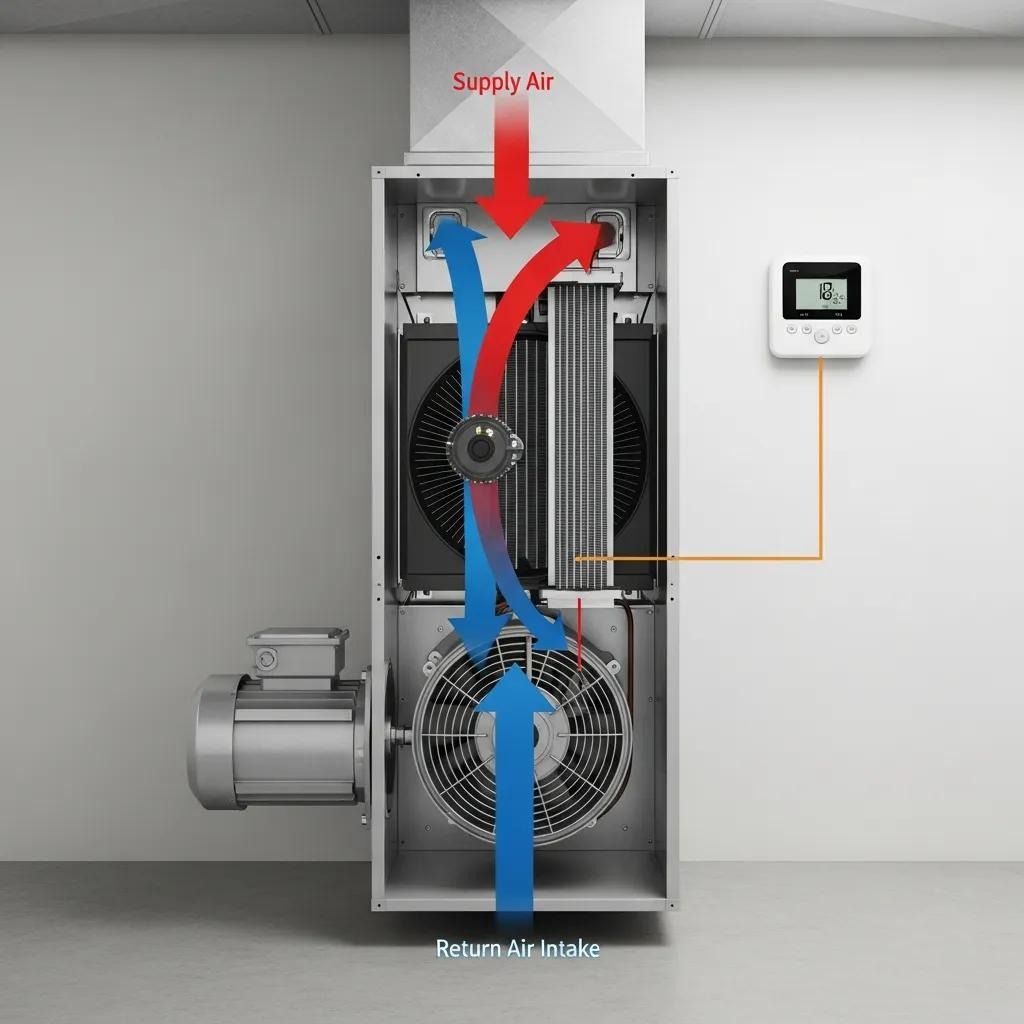
The blower motor connects to the thermostat through the control circuits. When the thermostat calls for heating or cooling, it energises relays that power the motor via the air handler’s control board or a dedicated fan relay. In PSC (permanent split capacitor) systems, speed is set by wiring taps. In ECM or variable-speed systems, electronic controls adjust the current to set RPMs precisely for better comfort and efficiency. Physically, the motor-mounted blower wheel sits inside the air handler cabinet, drawing return air across the coil and pushing it into the supply ducts. So, loose mounts, misaligned shafts, or clogged wheels will definitely cut down on airflow. Troubleshooting usually starts at the thermostat and control board, then moves to the capacitor and motor connections, with mechanical checks of the blower wheel and bearings if you hear noise or feel resistance.
What Are the Different Types of AC Blower Motors?
Blower motors generally fall into three categories: single-speed, multi-speed/PSC, and ECM/variable-speed. Single-speed motors run at one fixed RPM and are simple and inexpensive. PSC motors offer distinct speeds through electrical taps and are common in many older systems. ECM and true variable-speed motors use electronic controllers to vary speed smoothly, providing more precise airflow, lower energy use, and better humidity control. Choosing the right motor means considering the upfront cost, energy impact, the level of comfort you want, and compatibility with your existing air handler and controls. The table below compares their main characteristics and typical applications.
Motor types differ in efficiency, comfort impact, and how suitable they are for retrofitting.
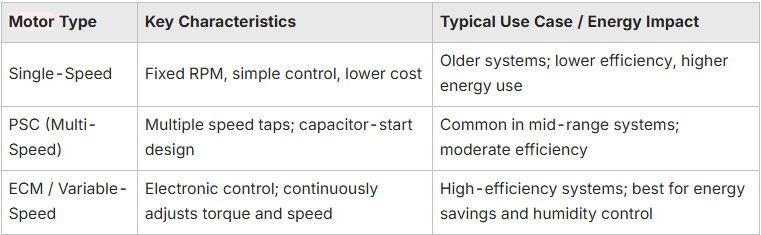
This comparison shows that ECM/variable-speed motors offer the biggest gains in efficiency and comfort, while single-speed motors remain the most budget-friendly replacement option.
How Do Single-Speed, Variable-Speed, ECM, and PSC Motors Differ?
Single-speed motors run at one set speed, giving you predictable airflow but limited comfort control and lower efficiency. PSC motors use a permanent-split capacitor and multiple wiring taps to provide distinct speed options. This is an economical compromise but still less efficient than electronic control. ECM and variable-speed motors use onboard electronics to adjust speed smoothly, drawing less power at partial loads and giving you finer humidity control. They also reduce inrush current and can extend motor life. From a service point of view, PSC and single-speed motors are often simpler to troubleshoot electrically, while ECMs may need diagnostic tools for controller-level issues and usually benefit from professional servicing because of their electronics.
What Are the Benefits of Variable-Speed and ECM Blower Motors?
Variable-speed and ECM motors save energy, stabilise comfort, and improve dehumidification compared with fixed-speed options. By matching airflow to real-time demand, they use less power at partial loads and reduce temperature swings, which also cuts down on compressor cycling. They run quieter and start softer, which reduces stress on ductwork and bearings and can lengthen system life when maintenance is kept up. In tight or humid homes, ECMs can run longer at lower airflow to remove more moisture. This is an important advantage over single-speed motors that tend to short-cycle.
What Are the Signs of a Bad AC Blower Motor and How to Troubleshoot?
Spotting early signs of blower motor trouble lets homeowners address problems before they become costly or unsafe. Common symptoms include weak airflow, unusual noises (like scraping, grinding, or squealing), burning smells or overheating, frequent breaker trips, and rising energy bills. These can stem from worn bearings, a failing capacitor, electrical faults, or a clogged blower wheel. Start troubleshooting with safe, low-effort checks. Confirm your thermostat settings, change filters, check breakers, and listen for odd sounds.
If simple fixes don’t help, you might need to escalate to electrical diagnostics or a professional inspection. The table below gives a symptom-to-action guide to help homeowners decide when to DIY and when to call a professional.
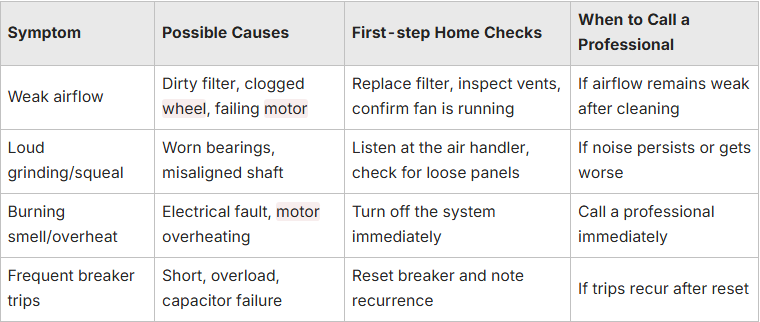
This quick triage helps homeowners isolate simple fixes and spot red flags that need professional diagnostics.
What Common Symptoms Indicate a Failing Blower Motor?
A failing blower motor usually shows clear signs: steadily falling airflow, new or worsening mechanical noises, electrical odours, and repeat breaker trips. Weak airflow can mean a blocked blower wheel or filter, or reduced motor torque from a failing capacitor or worn windings. Grinding or squealing often points to bearing wear or rotor/stator interference. A burning smell or visible overheating is a serious warning. Shut the system off and call a technician because it can indicate electrical failure or insulation breakdown and a fire risk.
Prioritising these symptoms helps you decide whether to try basic fixes or schedule a professional inspection.
How Can Homeowners Perform Basic Blower Motor Troubleshooting?
Homeowners can safely start troubleshooting with a short checklist that rules out common, non-electrical causes like dirty filters and blocked vents before touching electrical components. First, confirm your thermostat mode and fan settings, replace the air filter, check circuit breakers and fuses, and visually inspect accessible wiring and the capacitor for bulges or leaks. Always cut power at the breaker before opening the air handler. If the fan hums but the wheel doesn’t turn, the capacitor may have failed or bearings could be seized.
These issues should be handled by a technician. If unusual noises continue after filter and blockage checks, stop the unit and call a professional. These steps prioritise safety and escalate properly when homeowner checks don’t resolve the problem.
How to Maintain and Clean Your AC Blower Motor for Optimal Performance?

Routine maintenance prolongs blower motor life and keeps airflow efficient, which lowers energy use and improves comfort. Key tasks include regular filter changes, periodic coil and blower wheel cleaning, inspection of electrical connections and the capacitor, and lubrication where the motor design allows. These steps keep motor load within design limits and reduce overheating and premature wear. Below is a concise seasonal and annual checklist homeowners can follow to prevent common failures.
- Replace or clean the air filter every 1-3 months, depending on usage and filter type.
- Inspect the blower wheel and cabinet annually and remove dust and debris.
- Check electrical connections and the motor capacitor for damage or bulging.
- Lubricate motor bearings only if the motor has oil ports; otherwise schedule a professional inspection.
- Keep the air handler area clear and ensure return grilles and supply vents are unobstructed.
Following this checklist reduces load on the motor and improves system efficiency. When tasks exceed homeowner skill or when electronics are involved, it’s best to hire a professional.
What Are the Recommended Maintenance Procedures for Blower Motors?
Recommended procedures include regular air filter replacement, careful blower wheel cleaning, tightening electrical connections, visually inspecting the capacitor, and lubricating serviceable bearings. For cleaning, shut off power, remove the blower access panel, and use a soft brush or vacuum to remove dust from the wheel and housing. Avoid disturbing the wheel balance, as imbalance causes vibration and bearing wear. Electrical checks should confirm secure terminals and look for capacitor bulging or leakage. Replace any capacitor that shows signs of failure, as they commonly cause start and run issues. Performing these tasks quarterly to annually based on usage helps preserve motor life and system efficiency.
When Should You Seek Professional Help for Blower Motor Maintenance?
Call a professional when the issue involves electrical components, suspected bearing failure, overheating, or when disassembly goes beyond your comfort and safety level. Technicians safely test and replace capacitors, run diagnostics on ECM controllers, replace bearings or the motor itself, and perform airflow testing to confirm system balance. Pre-season professional tune-ups catch wear early and protect warranty-sensitive components. If you smell burning, see smoke, or experience repeated breaker trips, stop operation and contact a qualified technician right away. Those are high-risk electrical signs.
Ozair Group provides professional inspections and maintenance for homeowners who want technician-level diagnostics and repairs. Scheduling an expert review is wise when electrical or mechanical symptoms exceed basic homeowner checks or when warranty work is involved.
When Should You Replace Your AC Blower Motor and What Are the Costs?
Deciding to replace a blower motor depends on its age, how severe the symptoms are, the repair cost versus replacement value, the motor type, and system compatibility. Motors with progressive mechanical failure, repeated capacitor changes, or controller faults that prevent proper modulation are often candidates for replacement. Lifespan varies by motor type and maintenance history, and cost drivers include the part price, the complexity of the labour, how accessible it is inside the air handler, and whether additional parts (like a capacitor, control board, or ductwork repairs) are needed. The table below outlines common cost factors and typical ranges to help homeowners estimate expenses and weigh repair versus replacement.
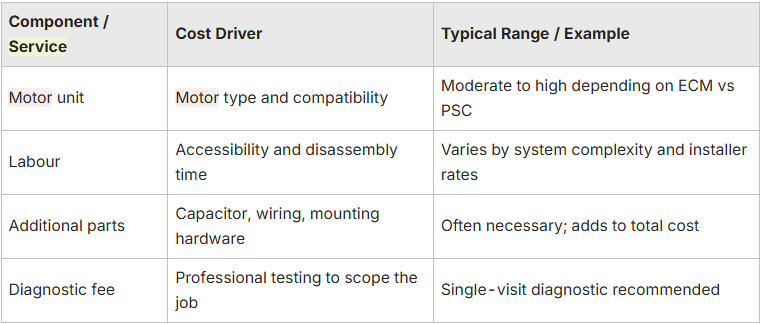
This breakdown shows why replacing a blower motor is rarely just a single line item and why an accurate on-site quote matters.
How Long Do AC Blower Motors Typically Last?
Blower motor lifespans generally range from about 10 to 20 years, depending on the motor type, operating conditions, maintenance, and usage. Single-speed and PSC motors in heavy-use settings or poorly ventilated cabinets tend towards the lower end, while well-maintained ECM motors that run at lower average loads can reach or exceed the higher end. Regular maintenance, including filter changes, balanced blower wheels, and electrical checks, significantly extends motor life by reducing heat and mechanical stress. Watch for steady increases in noise, falling airflow, or rising energy use. Those trends often mean the motor is approaching its end of life.
What Factors Affect Blower Motor Replacement Costs?
Replacement costs depend on the motor type (ECM units cost more than PSC), labour accessibility (cabinet disassembly and tight spaces increase time), compatibility with existing controls, and whether extra parts like capacitors or mounting brackets are needed. Replacing a single-speed motor is usually cheaper upfront than installing an ECM variable-speed unit, but an ECM often delivers long-term energy savings that can offset the higher initial price. Ask for an itemised diagnostic and quote that separates parts, labour, and ancillary repairs so you can compare repair versus replacement. If several components show age-related wear or you want better efficiency and comfort, a full motor upgrade may be the smarter long-term choice.
Ozair Group can provide a professional replacement assessment and options for motor upgrades, helping you weigh immediate costs against projected efficiency and comfort gains.
For an expert evaluation or to discuss motor replacement options with a service professional, contact Ozair Group for a concise, system-specific assessment and recommendation.


Areas we service
Oz Air covers Melbourne and its northern suburbs.

Get in touch



.png)