


.png)

What's a Blower Fan on an Air Conditioner?


Government Rebates Now Available on Energy-Efficient Air Conditioners when Replacing your Gas Heater.
A blower fan is the indoor component that pulls return air across the evaporator coil and pushes conditioned air into the ductwork and living spaces. Basically, it turns the motor's power into airflow by spinning a blower wheel or impeller inside its casing. This creates the static pressure and cubic feet per minute (CFM) your system needs for even temperatures and efficient cooling or heating. When it's working a treat, you'll enjoy better comfort, less wasted energy, and improved indoor air quality, as the air gets pushed through filters and ventilation cycles. This guide will walk homeowners and tradies through how blower fans work, common fan and motor types, why the blower is so important for your AC's performance and indoor air quality (IAQ), typical signs of trouble and basic fixes, plus maintenance tips to make your motor last longer. From the Ozair Group's point of view, we're all about clear, evidence-based advice, not just trying to sell you something. We'll also point out when we usually recommend certain motor technologies and what routine maintenance checks are important.
How Does an AC Blower Fan Work to Circulate Conditioned Air?
The blower fan circulates conditioned air by drawing room or return air into the air handler, moving it over the evaporator coil so the refrigerant can absorb heat, and then forcing the cooled air through the ducts to supply registers. The motor spins the blower wheel, often a squirrel-cage impeller, creating a pressure difference, with lower pressure on the return side and higher pressure on the supply side. This drives the airflow, measured in CFM. Fan operation is coordinated with the thermostat and control board so fan speed and run time match system modes and temperature demand. This connection explains why blocked return vents, dirty coils, or poorly matched ductwork can quickly drop your system's performance and lead to issues like coil icing or patchy room temperatures. Below, we'll take a peek inside the wheel and its casing to explain how that spinning motion turns into useful airflow.
What is the Mechanism Behind AC Blower Fan Air Movement?
The blower wheel takes rotational energy from the motor shaft and converts it into radial airflow by accelerating air outward across curved blades. This action creates both speed and static pressure. When your system has low resistance, the wheel delivers more CFM. When duct losses increase, it keeps up the pressure to push air through the whole network. The casing and wheel geometry set the fan curve, which affects noise, efficiency, and suitability for ducted systems. Making sure the blower wheel, its casing, and the motor are all a good match helps maintain the designed CFM across expected static pressures, stops your system from short-cycling, and gets the most heat transfer at the coil. Understanding how the impeller works also helps you figure out why your airflow might be weak, like from clogged wheels or motor wear.
How Does the Blower Fan Interact with the Evaporator Coil and Ductwork?
Air needs adequate speed and even distribution across the evaporator coil to transfer heat effectively without causing the coil to freeze or reducing dehumidification. The blower supplies that controlled flow. If your ducts are too small, leaky, or blocked, the static pressure goes up, and the blower has to work much harder. This means less CFM at your vents, more energy used, and increased wear and tear. Restricted airflow over a dirty coil reduces heat transfer and can cause icing or a higher evaporator temperature. On the flip side, too much airflow can actually reduce dehumidification. The blower, coil, and ductwork all work together as one integrated system. Picking the right fan, keeping your coils clean, and having sealed ducts are all essential for reliable, efficient air conditioning. That naturally brings us to the next section, all about fan and motor choices.
What Are the Types of AC Blower Fans and Motors?
Air conditioning systems use different combinations of fans and motors. You'll find centrifugal, also known as squirrel-cage, and axial fans for different jobs, paired with motor technologies like single-speed PSC, multi-speed, and variable-speed ECM. Each pairing influences pressure capability, noise, energy use, and control flexibility. The right choice depends on whether the system is ducted or free-blowing, the expected static pressure, and comfort priorities. The handy comparison below points out the practical trade-offs to help you choose and troubleshoot. From an informational point of view, Ozair Group often suggests variable-speed ECM blower motors when energy efficiency, consistent airflow, and humidity control are important. However, single-speed motors are still a budget-friendly option for basic upgrades.
Different fan and motor combinations show clear trade-offs across performance, noise and efficiency:
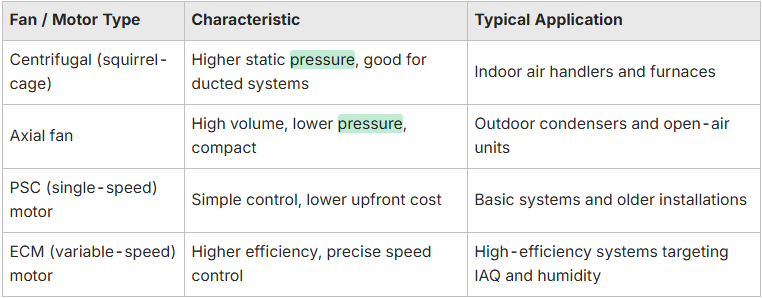
This comparison explains why centrifugal blowers paired with ECM motors are a common choice where duct resistance and comfort control are priorities. Choose according to expected static pressure, noise limits, and control compatibility.
For homes with multiple ducted zones or systems aiming for better indoor air quality, variable-speed ECM motors offer noticeable benefits in comfort and energy use. They also support continuous air circulation and better filtration. For straightforward, budget-friendly upgrades, a single-speed motor might still be the go. Compatibility and what you expect from the system should guide your decision.
How Do Centrifugal and Axial Fans Differ in AC Systems?
Centrifugal and axial fans differ in blade shape and casing design, which determines how they generate pressure and move air. Centrifugal, or squirrel-cage, blowers push air outwards and create higher static pressure. This makes them perfect for pushing air through long or tricky duct runs, which is why you often find them in air handlers and furnaces. Axial fans move air along their rotation axis, giving you higher volume at lower pressure. They're great for condensers and open-air setups where there's not much duct resistance. Differences in the impeller's curve, the casing, and the inlet shape all impact noise and how well the system matches up. Picking the right fan stops inefficiency and early motor stress. In the real world, your choice depends on your duct layout, the CFM you're aiming for, and how much noise you're willing to put up with.
What Are the Benefits of Single-Speed vs. Variable-Speed Blower Motors?
Single-speed motors run at a set RPM, offering straightforward, reliable operation and a lower upfront cost. However, they provide limited comfort control and aren't as energy efficient. Variable-speed (ECM) motors adjust their RPM to match the load. This improves humidity control, reduces the initial power surge when starting, and runs quieter by operating longer at lower speeds. The main trade-offs are a higher initial cost and needing to make sure your thermostat and control board are compatible. But, ECMs often pay for themselves through lower electricity use and less mechanical wear, thanks to their softer starts and longer, slower cycles. For upgrades, double-check control compatibility so your variable motor can actually deliver all its good stuff.
Why Is the Blower Fan Key for AC Performance and Indoor Comfort?
The blower fan dictates the airflow pattern, which decides how quickly and evenly conditioned air gets to each room. This directly affects how consistent your temperature is and how comfortable you feel. Good airflow helps maintain your target temperatures, allows for effective dehumidification by keeping the coil running well, and makes sure your filters and ventilation cycles actually improve your indoor air quality (IAQ). Your energy bill also depends on how your blower behaves. Incorrect fan speed or running for too long due to poor control will hike up your electricity use and mess with your compressor's efficient cycling. Below, we've listed the blower's main jobs and some easy checks homeowners can do to make sure it's working properly.
The blower fan’s key roles include:
- Temperature distribution: moves cooled or heated air to reduce hot and cold spots.
- Heat exchange support: provides the airflow needed across the evaporator coil for effective cooling.
- IAQ support: circulates air through filtration and ventilation cycles to reduce particulates.
These roles show why keeping the fan operating correctly is central to both efficiency and comfort. The next section outlines household checks for consistent cooling and heating.
How Does the Blower Fan Ensure Consistent Cooling and Heating?
Consistent conditioning depends on delivering the right CFM to each supply register, which is controlled by fan speed, duct balancing, and register sizing. A variable-speed blower can ramp for peak loads and back off during steady-state operation, reducing temperature stratification and short cycling. Simple home checks, like measuring temperature differences from one vent to another or noticing weak airflow in rooms further away, can point to blower problems. Fixes often involve sealing ducts, adjusting dampers, or checking fan speed settings to get that stable temperature control back.
What Role Does the Blower Fan Play in Energy Efficiency and Indoor Air Quality?
The blower impacts how much energy the fan uses, how much air goes through your filters, and your humidity control. These factors together shape your indoor air quality and system efficiency. Variable-speed motors slash total energy by running at lower RPMs for longer cycles. This improves latent load removal and reduces the peak electrical draw. Studies show ECMs can significantly lower the energy used by the blower compared to PSC motors. Continuous circulation filters and dilutes indoor air more effectively, but it also means your filters will get dirtier faster and need replacing more often. To balance ventilation and efficiency, you need to optimise your fan schedules and keep up with proper filter maintenance to hit both your indoor air quality and energy targets.
What Are Common AC Blower Motor Problems and How Can They Be Troubleshooted?
Typical blower motor problems include weak airflow, strange noises, overheating, and intermittent operation. These signs usually come from something blocking the mechanics, an electrical component failing, like a capacitor or control board, or wear and tear on the bearings and shaft. Homeowners can often figure out if it's a simple fix, like a clogged filter or blocked vents, or if it's a job for a qualified technician, like electrical failures or internal motor damage. The quick-reference table below connects common symptoms to likely causes and suggests initial checks. After the table, we've listed safe, step-by-step checks for homeowners and important safety warnings.
Troubleshooting quick-reference for common symptoms:

This table helps homeowners decide whether a DIY fix is appropriate or a professional service call is needed. Safety is essential when electrical components are involved.
What Are the Symptoms of a Faulty AC Blower Motor?
A dodgy blower motor will show clear signs: less air coming out, strange mechanical noises, or it might not run consistently across different fan speed settings. Grinding, squealing, rattling, or scraping often means the bearings are failing or there's something foreign stuck in the casing. Higher energy bills or short cycling can point to an inefficient motor or control issues. If the blower only runs on certain thermostat settings or not at all, you might have a capacitor or control board problem. If you smell electrical burning, see smoke, or notice excessive heat, switch the system off straight away and get onto a qualified technician.
How Can Homeowners Troubleshoot and Identify Blower Fan Issues?
Homeowners can safely do a few checks before calling for service. Start with the air filter, make sure your supply vents and return grilles are open, and after disconnecting the power, check the visible blower casing for any gunk. Change the thermostat fan setting to see if the airflow changes and listen for any differences in noise. If the airflow gets better with the fan set to ON, the problem might be related to the controls. Steer clear of electrical testing or replacing capacitors unless you're trained. If the motor hums but won't spin, or if you notice smells or heat, stop what you're doing and book a professional diagnostic. These steps help you tell the difference between simple fixes and issues that need certified service, potentially saving you from unnecessary replacements.
Homeowner troubleshooting checklist includes:
- Replace or inspect the air filter and check return vents for blockage.
- Visually inspect accessible blower housing for debris with the power off.
- Toggle thermostat fan settings to observe behavior and note irregularities.
How Can Regular Maintenance Optimise AC Blower Fan Performance and Longevity?
Regular maintenance reduces stress on your motor, stops imbalance from dirt building up on the blower wheel, and spots electrical weaknesses early. Each of these actions extends its service life and keeps your system running efficiently. A routine of changing filters, cleaning coils, inspecting the blower casing, and annual professional electrical checks prevents many common breakdowns and improves your system's COP, or coefficient of performance. The maintenance table below links tasks to recommended frequencies and what impact you can expect, so homeowners can plan effectively. Following this checklist lowers the risk of emergency repairs and helps your system perform consistently.
Key maintenance tasks and their frequency:
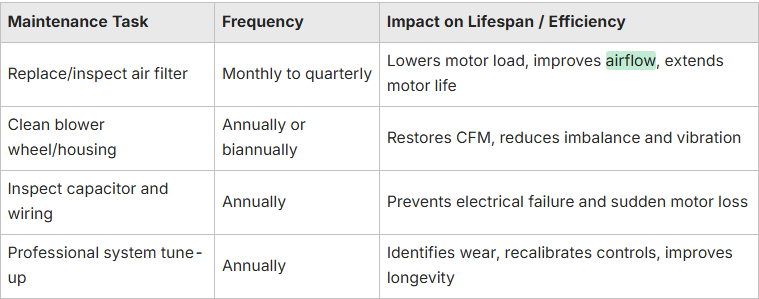
These recommendations show that routine attention produces measurable benefits in performance and cuts the likelihood of abrupt failures.
Ozair Group's recommended maintenance checklist and frequency, from an informational point of view: Ozair Group suggests checking or replacing your HVAC air filters monthly during heavy-use seasons and at least quarterly all year round. We also recommend scheduling blower wheel and casing cleaning annually, and booking an annual professional inspection that includes capacitor testing and motor lubrication where needed.
These best practice steps help keep your airflow good, reduce the risk of motor overload, and protect your indoor air quality.
What Maintenance Practices Extend the Lifespan of AC Blower Motors?
Key preventative tasks that make your blower motor last longer include changing filters on time, getting rid of dust from blower wheels, keeping return paths clear, and checking electrical bits like capacitors and relays. Clean filters keep tiny bits of dust out of the blower casing. Clogged filters make the motor work harder, which raises temperatures and speeds up bearing wear and insulation breakdown. Cleaning the blower wheel gets rid of any imbalance that causes vibration and stress on the bearings. Balancing and alignment checks during service visits further reduce wear and tear. Regular professional inspections can spot early electrical issues, so dodgy capacitors or worn bearings can be replaced before they completely conk out.
How Does Proper Cleaning and Inspection Improve Blower Fan Efficiency?
Dirt building up on the blower wheel reduces the effective CFM and makes the motor run longer to hit your set temperatures, which means more energy use and higher running costs. Cleaning usually brings back a good chunk of that lost airflow, making your system more responsive, while also cutting down on run time and the motor's electricity draw. Inspections that pick up on dodgy capacitors or wiring problems keep your system starting smoothly and avoid those hard-start cycles that speed up wear and tear. A routine of cleaning, balancing, and electrical checks shows clear improvements in airflow and efficiency, proving the return on investment for maintenance through lower energy bills and fewer emergency repairs.
Maintenance priorities summary:
- Change filters regularly to keep motor load low.
- Clean the blower wheel and housing annually to restore airflow and balance.
- Schedule annual professional electrical checks to prevent sudden failures.
If you're not sure about a diagnosis or the right fix, have a chat with a qualified HVAC technician. They can safely test capacitors, measure static pressure and CFM, and recommend any upgrades. Ozair Group's approach focuses on practical, evidence-based best practices. That means regular filter care, annual professional inspections, and considering variable-speed ECM motors where efficiency and indoor air quality are top priorities. All this helps keep your blower fans running efficiently and makes your system last longer.


Areas we service
Oz Air covers Melbourne and its northern suburbs.

Get in touch



.png)